

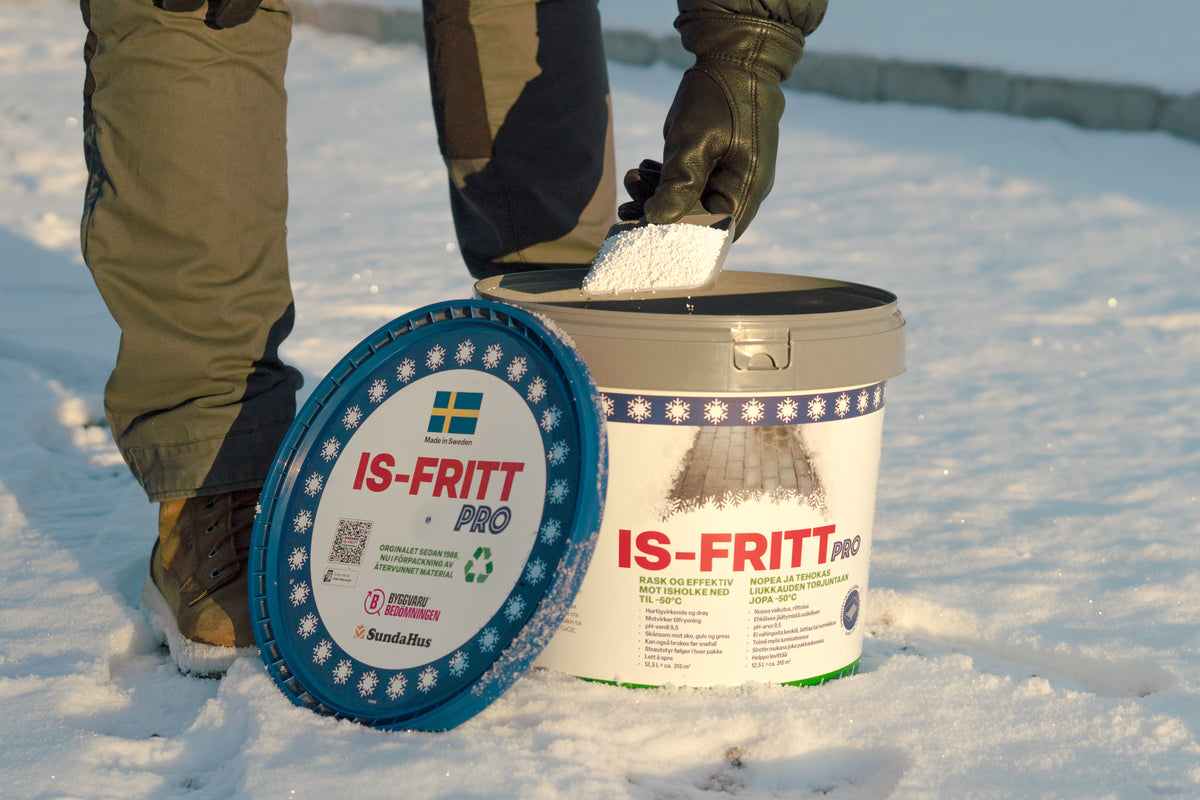
When temperatures fluctuate between above and below freezing, your driveway can quickly become both slippery and icy. Snow that melts during the day freezes into ice overnight, and suddenly it can be difficult to get around without slipping. But what is really the best way to remove ice from the driveway?
Here we share some simple tips for melting ice, preventing slips, and keeping your driveway safer during the winter.
How do you remove ice from the driveway?
There are several ways to combat ice and slippery conditions. Which method is best depends on the temperature, the thickness of the ice, and the type of surface you have.
1. Melt away the ice with an ice melt
An effective way to remove ice from the driveway is to use an ice melt. Unlike sand and gravel, which primarily provide better grip, ice melts help to melt the ice itself.
IS-FRITT PRO is a fast-acting ice melt based on calcium chloride. It works even at very low temperatures and can be used both to melt existing ice and to prevent ice formation.
2. Remove the snow before it freezes
Regular snow removal is a simple way to reduce the risk of slipping. When snow is packed down by cars or footsteps and then freezes, it can form a hard layer of ice that is difficult to remove.
Therefore, try to shovel away the snow as early as possible, especially when the weather forecast shows fluctuating temperatures.
3. Use grit for better grip
If you want to reduce the risk of slipping without melting away the ice, sand, gravel, or other grit can be an alternative.
IS-FRITT Leca Safe is a lightweight grit made of crushed lightweight aggregate that improves grip on slippery surfaces. It weighs significantly less than traditional sand and is easy to spread on, for example, driveways, walkways, and stairs.
Can you prevent slips on the driveway?
Yes! By preparing the driveway before the cold weather arrives, you can reduce the risk of ice formation.
Here are some simple tips:
-
Shovel regularly: Remove snow before it gets packed down and freezes.
-
Check the drainage: Avoid water collecting in puddles where it can freeze.
-
Keep an eye on the weather: Be extra vigilant when the temperature fluctuates around freezing.
-
Use preventive slip control: Some ice melts can be applied before snowfall and frost.
 What is best against slips – sand or ice melt?
It depends on what you want to achieve.
Sand and grit improve grip on slippery surfaces without melting the ice and can be a more paw-friendly alternative for our four-legged friends.
Ice melts on the other hand help to break down the ice layer, which makes it easier to remove ice from the driveway.
Both methods can be effective, but serve different purposes. If you have a thick layer of ice, an ice melt can be a good alternative, while grit is suitable when you primarily want to improve traction.


Which IS-FRITT should you choose?
Different winter conditions require different solutions. In IS-FRITT's sortiment there are several options for slip control, including PRO, EASY, ECO and Leca Safe.
The choice depends on whether you want to melt away ice, prevent refreezing, or improve grip on slippery surfaces.
With the right slip control, you can make the driveway safer and winter maintenance easier.


